When Does History Happen?
Epistemology, politics, and science

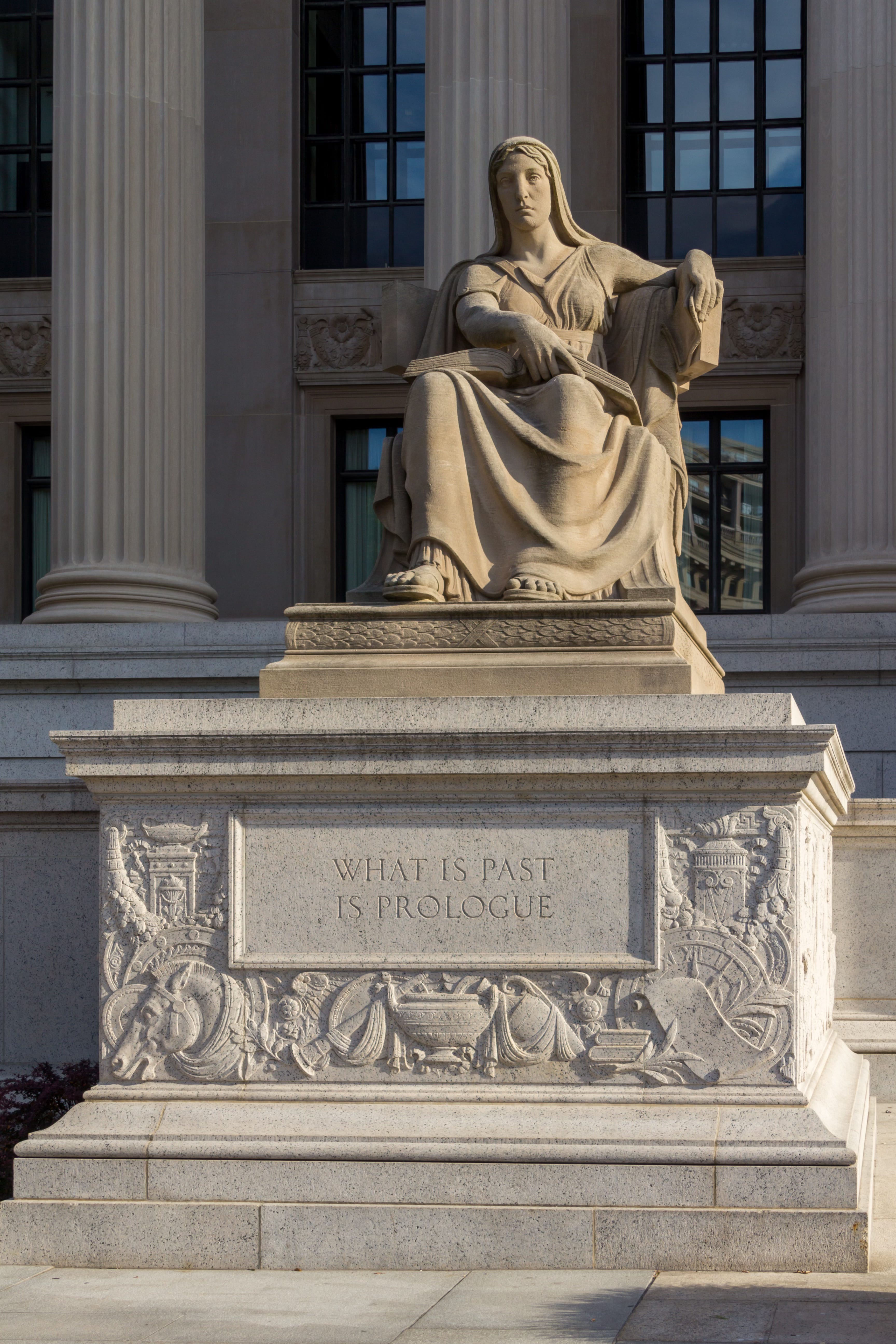
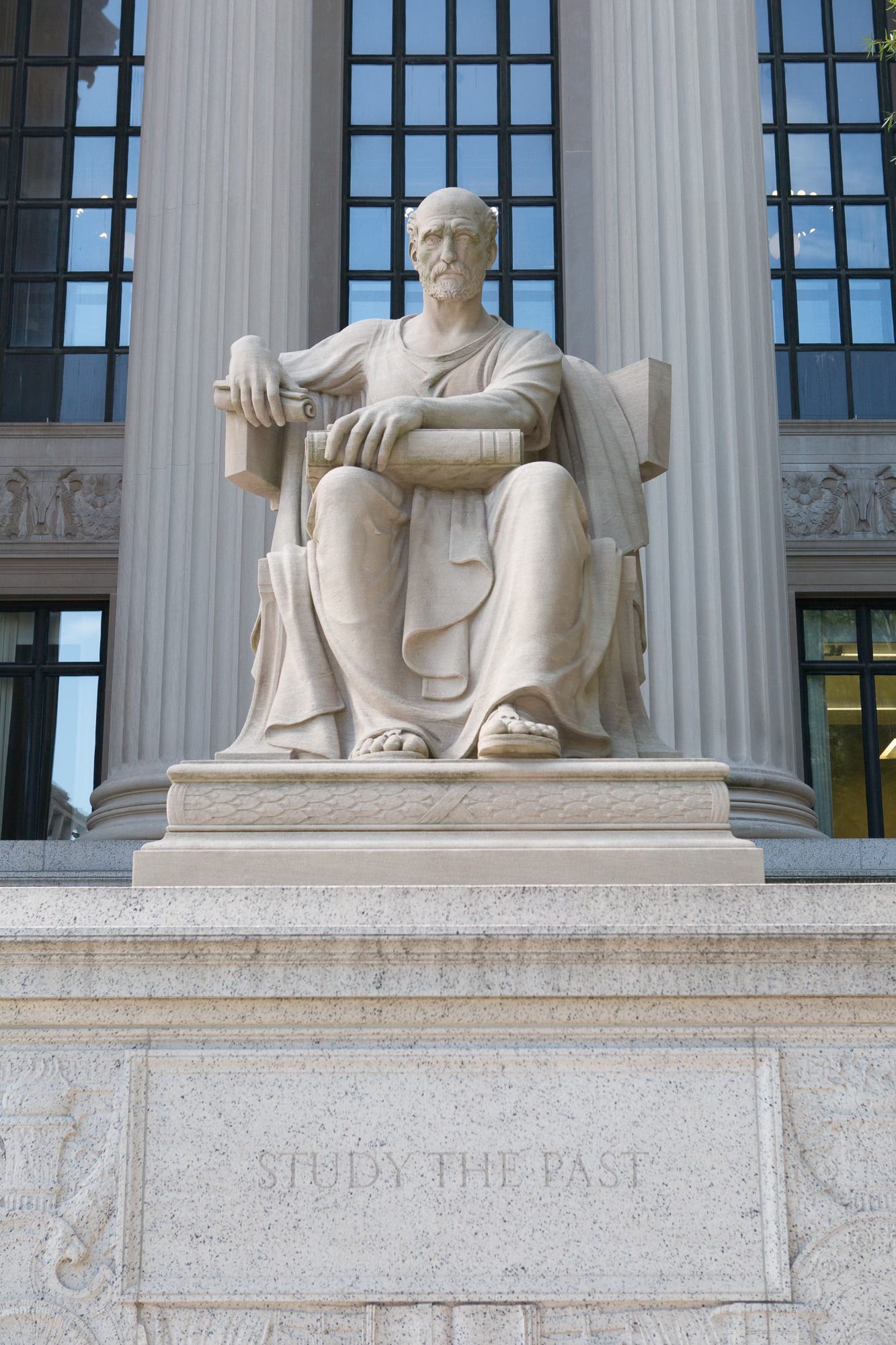
There are two huge sculptures on the Pennsylvania Avenue side of the National Archives in Washington, DC. Each was carved (during 1934 -1935) from a single piece of Indiana limestone and is more than ten feet in height.1
On the base of one of them (depicting a youthful woman holding an open book) is a quote from The Tempest, “What is past is prologue.”
The other sculpture depicts an old man holding a closed book. On the base, these words: “Study the past.” (Paraphrasing Confucius, Study the past if you would divine the future.)
History is important, and its telling is threatened by the Trump administration.
President Trump’s executive order (March 27, 2025), “Restoring Truth and Sanity to American History,” directs the Smithsonian Institution to eliminate “divisive, race-centered ideology” and mandates the revision or removal of exhibits and programs deemed to promote “improper ideology.” Vice Present J.D. Vance will assure that museum content supports a narrative focused on national greatness and avoids perspectives labeled as destructive or divisive.
Meanwhile, our current news cycle is an explosion of other Trump-fueled stories, ranging from the possibility of peace in the Middle East to the administration’s plan to send troops to Chicago to “stop violence and promote stability.”
And there are attacks on science and the constitution.
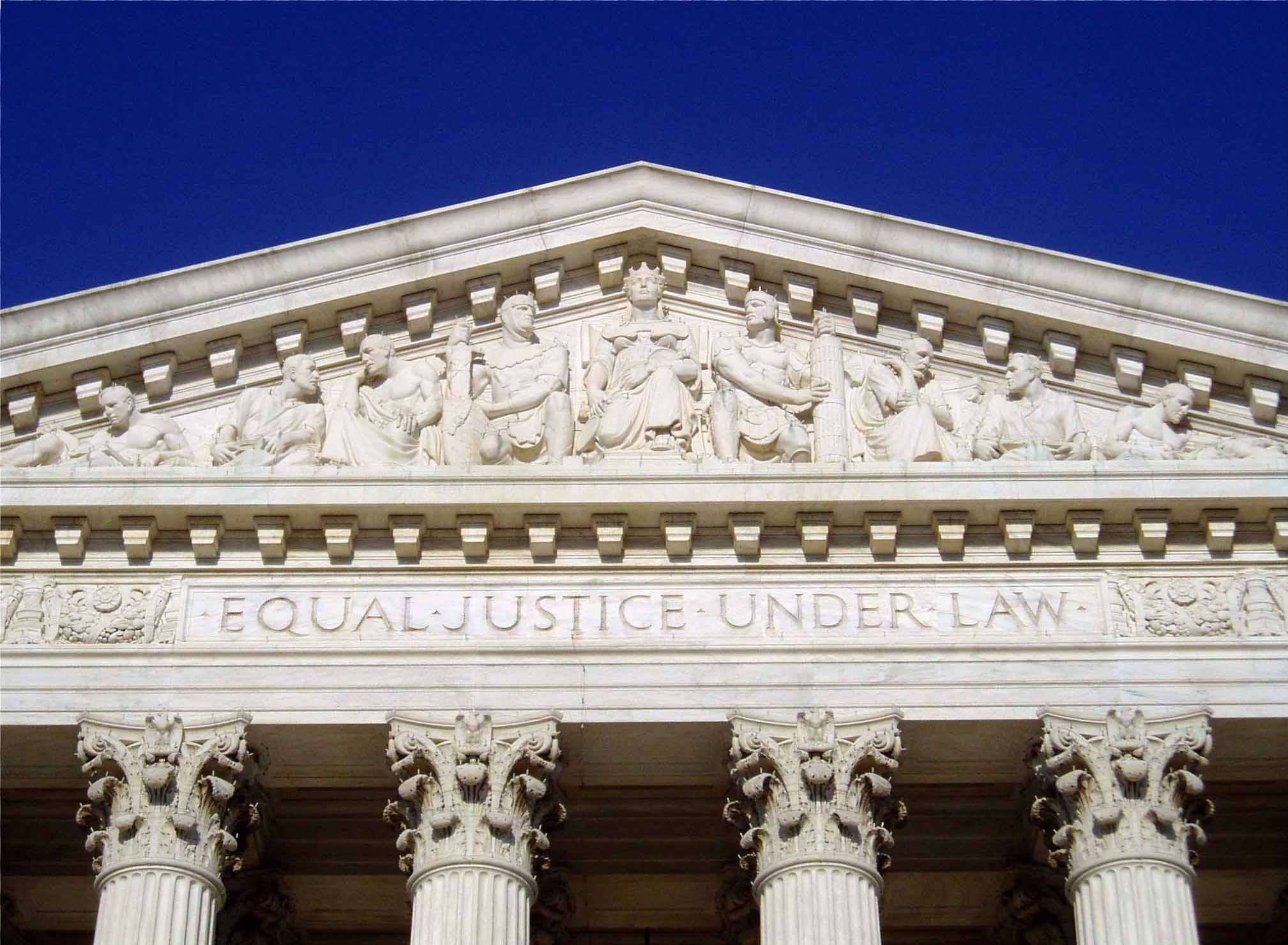
Plus Trump’s personal retribution attacks, facilitated by attorney general Pam Bondi. Bondi’s recent actions threaten the Supreme Court’s purpose. Above the marble columns are the words “Equal justice under law”:

These attacks are supported by Web-based algorithms that amplify lies.
Truth is historically held in high regard. From a Western perspective, it is codified in the Biblical Commandment, “Thou shalt not bear false witness against thy neighbor.”2
It looks like a march towards tyranny, never a happy outcome.